


Environmental Sustainability
At Iarnród Éireann we are transforming how we run our business. We aim to minimise our impact on, and maximise the benefits to the environment. We will do this in a number of ways:
Climate Action Plan
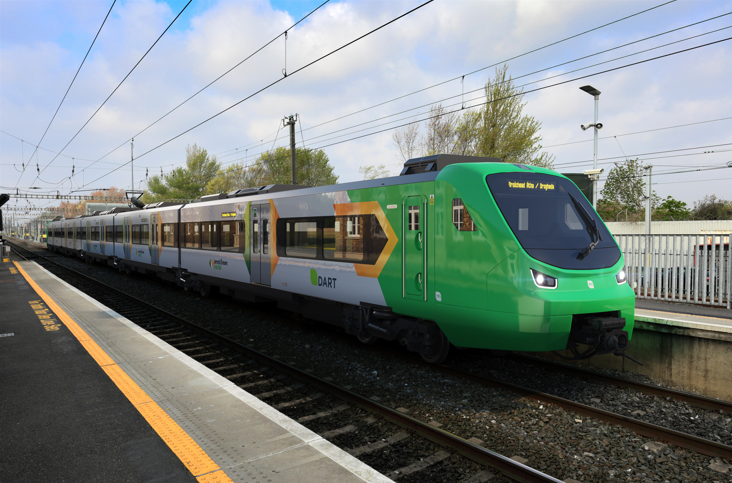
Our Climate Action Plan 2023-2030 lays out the path to reducing emissions by 51% by 2030.
We will deliver on the plan while rail services grow. Our target is 80 million passenger journeys per annum by 2030. (Up from a pre-COVID high of 50.1 million journeys.) We also expect rail freight volume to double.
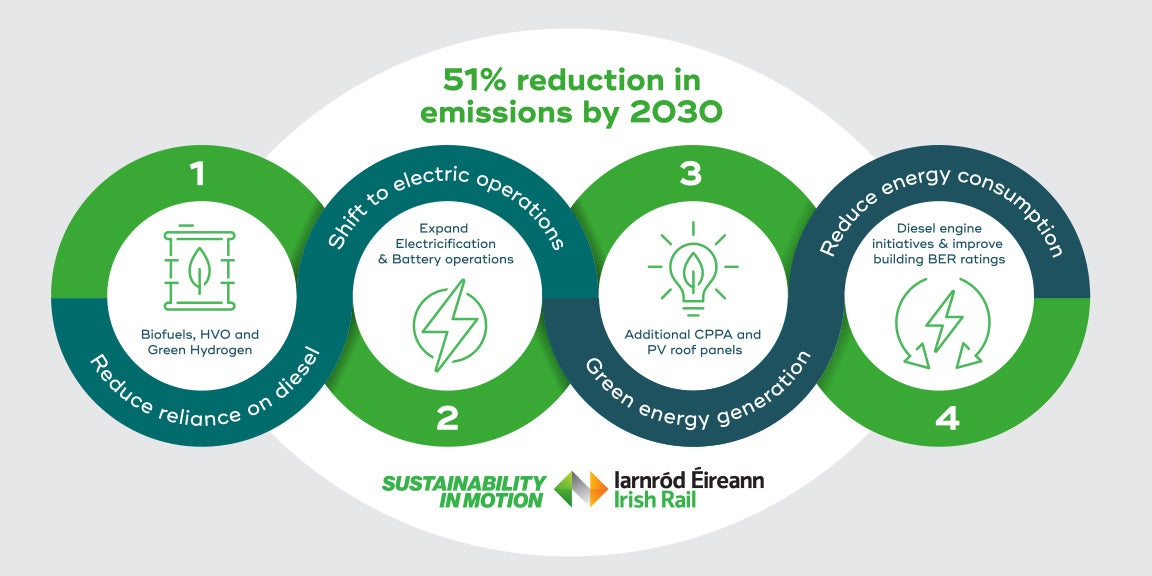
We will reduce emissions through:
- Reduced reliance on diesel through alternative fuels on existing fleets
- Transitioning to electric-powered fleet
- Green energy generation and corporate purchasing power agreements
- Fleet and building works to reduce energy consumption
Where do Iarnród Éireann's emissions come from?
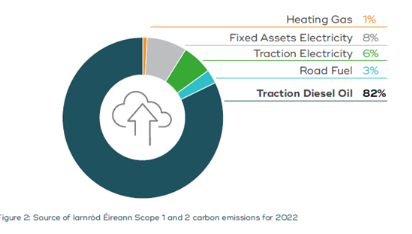
In 2022, the use of diesel fuel on rail and road operations made up 85% of our total emissions. A reduction of our diesel fuel use is vital for us to decarbonise.
To meet our public sector goal of 51% lower emissions by 2030, we must work to reduce our Scope 1 and 2 emissions to 70,800 tonnes. We must do this while we grow passenger journeys and rail freight. This in turn will support the national effort to reduce transport emissions.
See the full details here Iarnród Éireann's Climate Action Plan.
In 2018, our combined Scope 1 and 2 greenhouse gas emissions were 144,400 tonnes of CO2. (Scope 1 means they come directly from our work. Scope 2 means they come from our use of bought energy.) This makes up about 1% of all national transport emissions (SEAI).
Click here for our Scope 3 Emissions Reduction Strategy. This shows how we aim to manage our indirect emissions. (Scope 3 means they are produced by our suppliers, contractors and other stakeholders up and down our supply chain.) It outlines how we will get to net zero emissions by 2050.
Climate Change and Rail Resilience
Our services play a key role in Ireland’s transport system.
Climate change has meant more extreme weather. Storms are happening more often and are becoming stronger. Sea levels are rising. Winds are getting stronger. This means drier summers and wetter winters.
These changes can disrupt our services.
Running rail services during severe weather is an ongoing challenge. Conditions can change quickly, and we must be ready.
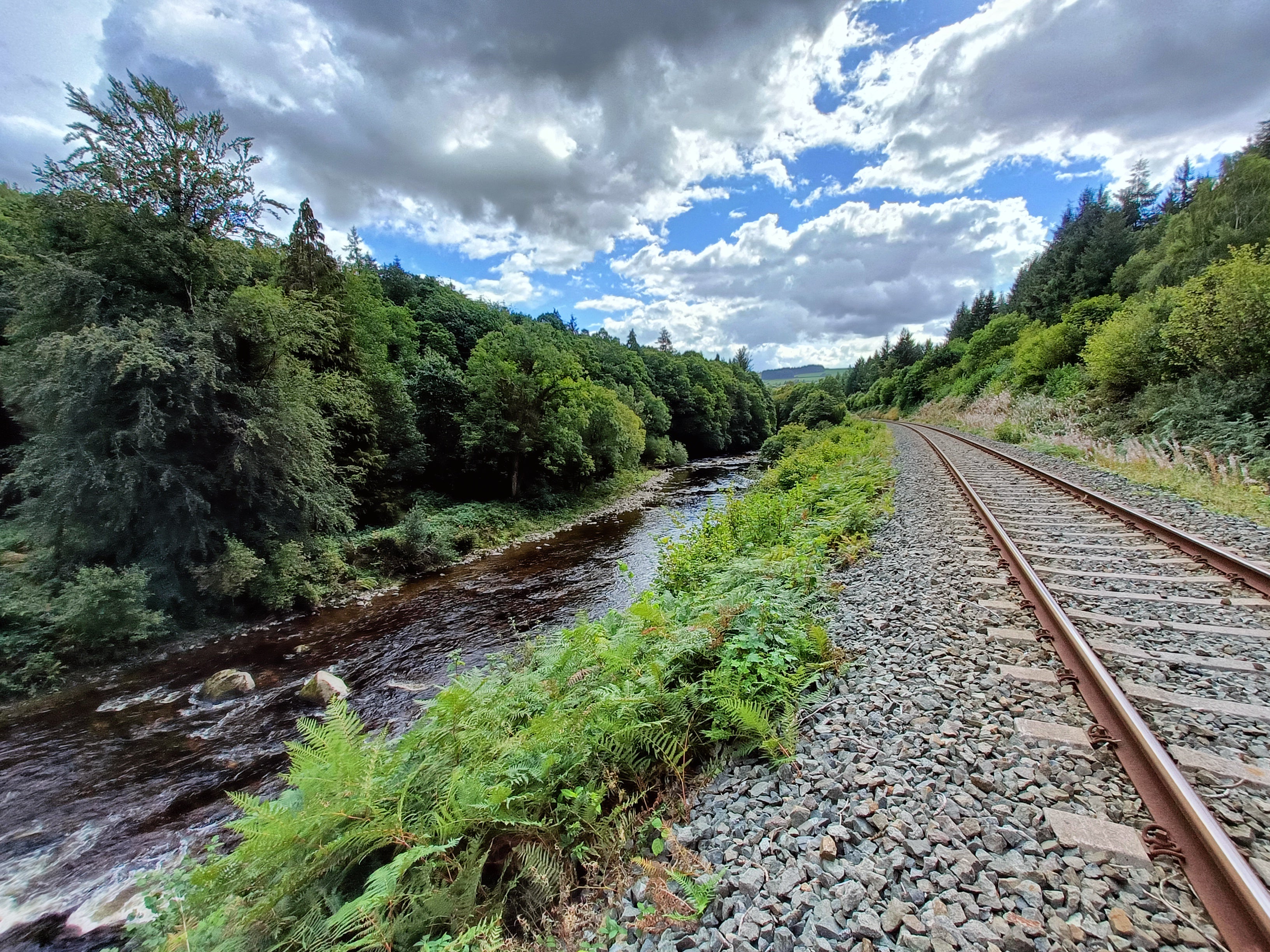
Iarnród Éireann is dedicated to improving the resilience of Ireland's railway to weather and climate impacts in turn enhancing safety, operational and financial performance and delivering a better customer experience.
To safeguard the railway, climate adaption activities must be embedded into how we do things including the maintainance of fleet and railway infrastructure and train operations and procedures.
We are working to make our railway more resilient. This helps us to improve safety and to provide a better service.
To protect the railway, climate adaptation must be embedded in how we work. This includes how we maintain our network, as well as how we operate our services each day.
You can read more in our Climate Adaptation Strategy. The video below shows how we work to keep the rail network running.
For more details on how we plan to reduce energy use, please see our Energy Policy.
Environmental Management
There are areas of our work that impact the environment more than others. The Chief Mechanical Engineering (CME) and the Chief Civil Engineering (CCE) Departments do so the most. Both are certified to the international standard for Environmental Management (ISO 40001:2015). We will still work to reduce our impact on the environment and our use of natural resources as much as we can.
Some of our key goals include the following:
- Restore nature in areas that have been damaged in the past
- Make our trains more fuel efficient
- Use more alternative fuels
- Make our sites more energy efficient
- Reduce noise from our work
- Improve the air quality in our stations
- Reduce our use of pesticides
- Improve the way we sort and manage waste
- Reduce waste as we grow the Circular Economy
- Manage water use on our sites
These goals help us to build a safer rail network. For more on our commitment to care for the environment, see our Environmental Policy. For more on how we aim to manage our impact, see Sustainability in Motion.
Waste Management and the Circular Economy
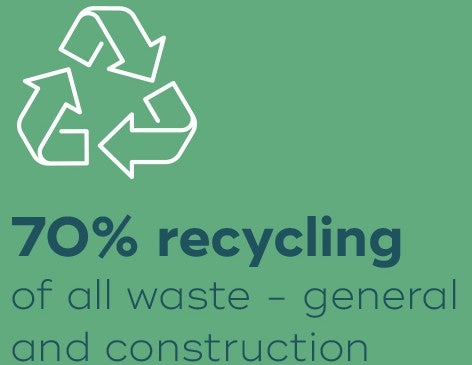
We aim to buy well and waste less. Our 2030 target is to recycle 70% of all waste from our work. As well as that, we aim to get 25% of raw materials from recycled sources. We will prioritise the reuse of concrete sleepers when they must be disposed of. Our procurement practices will favour eco friendly options. We close the loop on waste where we can to help build a smart, low waste rail system.
You can read more on these practices and on our circular initiatives in our Sustainability in Motion Strategy 2024 - 2030.
Protecting and Enhancing Biodiversity
Our rail network spans more than 4,000km throughout Ireland. It is important that we protect nature along our tracks.
We run many programmes to support nature and protect wildlife. For example:
- We manage plant life where invasive species grow
- We protect native wildlife
- We plant new trees to help cut carbon
(We have planted 300 native trees in Ballykilty, Co Wexford so far) - We are in the process of creating pollinator plans at all of our stations to do our part for the All Ireland Pollinator Plan
(1/3 of stations now have this in place) - We grow food in our station gardens in Castlebar and Westport.
We provide Biodiversity Guidelines for all of our infrastructure staff. These tell our staff how they can protect nature at work. This includes care for animals, plants, and marine life when working on tracks or any part of our network.
Our rail network goes through a wide range of land types and is in need of constant upkeep. Our Biodiversity Guidelines are in place so that all work to be done takes the full local ecosystem into account. This helps us to do vital work while limiting the impact we have on the world around us.
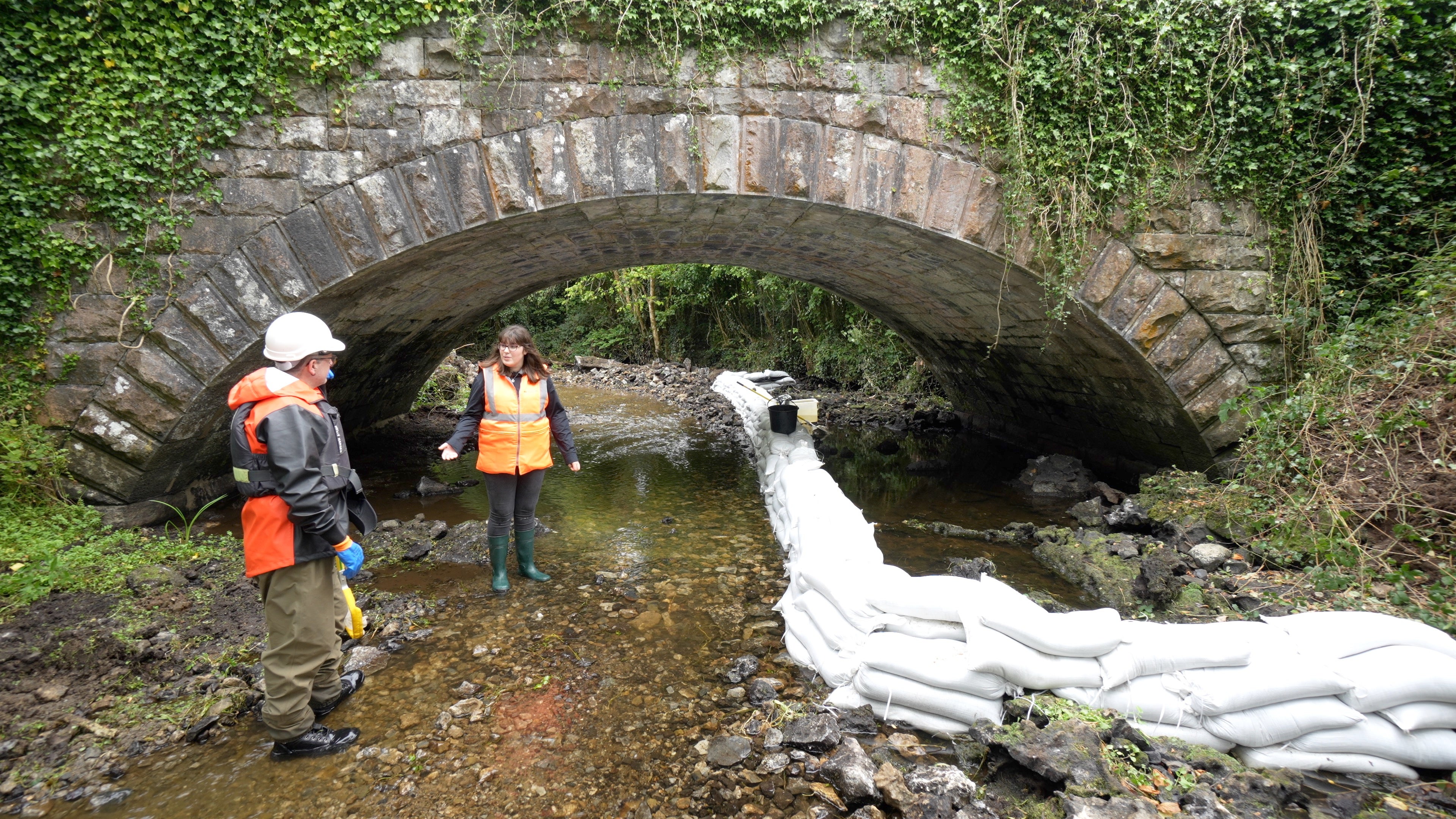
Below, our ecologist Jayne Ryan shares an example of how we protect water life during bridge works.